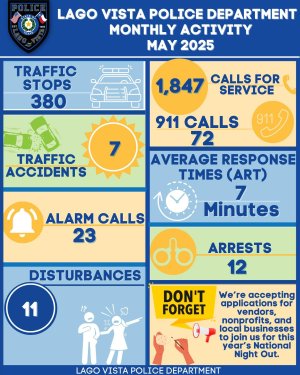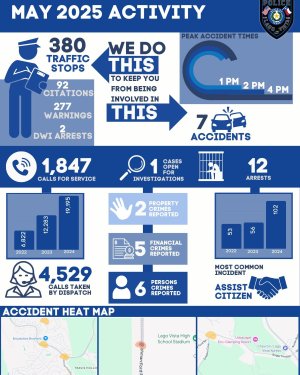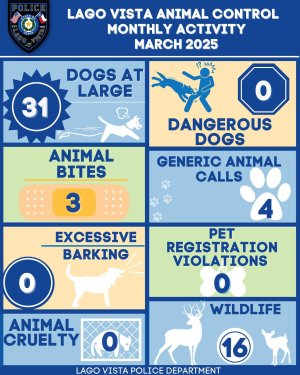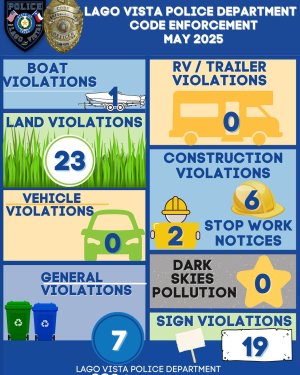
I want to express support for restoring the infographic-style monthly reporting that the Police Department provided earlier this year. Those summaries offered a clear view of key public-safety metrics, including calls for service, response times, traffic enforcement activity, and crime trends, and they were extremely helpful for both transparency and policy-level oversight.
As Council reviews expectations for policing philosophy and public-safety priorities, I believe we should remain focused on outcomes rather than day-to-day operations. With that in mind, I support emphasizing three core areas:
1. Traffic Safety
Consistent visibility and enforcement along FM 1431, school zones, and neighborhood cut throughs remain high community priorities. Reliable reporting helps us assess whether traffic-safety outcomes are trending in the right direction.
2. Crime Trends and Prevention
Clear monthly data on property crimes, theft, drug-related incidents, and suspicious-activity calls allows Council to understand trends and make better-informed decisions about long-term strategies and resource needs.
3. Response-Time Reduction
Timely response is a fundamental expectation of policing. Having monthly reporting on response times, especially by call type and priority level, gives Council the ability to track improvements and identify where additional support may be needed.
As Council conveys expectations and states their desired outcomes, the City Manager and Interim Chief of Police determine how best to meet them operationally. But recurring, consistent reporting provides the visibility required for Council to perform our policy responsibilities effectively.
In a prior conversation, the City Manager shared that in one of his former cities he worked closely with a Chief to develop a robust reporting and metrics system that greatly improved transparency and decision-making. I look forward to hearing his thoughts on how a similar framework could be implemented here in Lago Vista.
Restoring the monthly infographic reports, paired with Lago Vista centric metrics, would strengthen our ability to understand trends, support our officers, and ensure we are meeting the community’s expectations for safety and service.
As Council reviews expectations for policing philosophy and public-safety priorities, I believe we should remain focused on outcomes rather than day-to-day operations. With that in mind, I support emphasizing three core areas:
1. Traffic Safety
Consistent visibility and enforcement along FM 1431, school zones, and neighborhood cut throughs remain high community priorities. Reliable reporting helps us assess whether traffic-safety outcomes are trending in the right direction.
2. Crime Trends and Prevention
Clear monthly data on property crimes, theft, drug-related incidents, and suspicious-activity calls allows Council to understand trends and make better-informed decisions about long-term strategies and resource needs.
3. Response-Time Reduction
Timely response is a fundamental expectation of policing. Having monthly reporting on response times, especially by call type and priority level, gives Council the ability to track improvements and identify where additional support may be needed.
As Council conveys expectations and states their desired outcomes, the City Manager and Interim Chief of Police determine how best to meet them operationally. But recurring, consistent reporting provides the visibility required for Council to perform our policy responsibilities effectively.
In a prior conversation, the City Manager shared that in one of his former cities he worked closely with a Chief to develop a robust reporting and metrics system that greatly improved transparency and decision-making. I look forward to hearing his thoughts on how a similar framework could be implemented here in Lago Vista.
Restoring the monthly infographic reports, paired with Lago Vista centric metrics, would strengthen our ability to understand trends, support our officers, and ensure we are meeting the community’s expectations for safety and service.